For many fans, Arctic Monkeys didn't just release albums — they defined a moment in life. The years between 2006 and 2013 weren't just a chapter in the band's history; they were a cultural era. Sweaty indie clubs, sharp lyrics shouted back at the stage, fast riffs, chaotic energy, and a sense that anything could happen at a live show.
While Arctic Monkeys have continued to evolve into sophisticated, cinematic territory, a huge portion of their fanbase still longs for the raw electricity of those early years — from Whatever People Say I Am, That's What I'm Not through to AM. It's the sound of youth, nights out, first heartbreaks, and unforgettable gigs.
The reality is, modern Arctic Monkeys tours rarely focus on recreating that early chaos. The band has moved on — but the fans haven't.
That's where tribute bands come in. But not all tributes are created equal.
Artificial Monkeys exist to do one thing properly: to bring the 2006–2013 Arctic Monkeys era back to life with authenticity, energy, and respect for the original sound — not parody, not fancy dress, not shortcuts.
This article explores why that era still matters, what fans miss most about early Arctic Monkeys, and how Artificial Monkeys deliver the closest experience you can get to seeing the band in their prime.
Use the Table of Contents to jump ahead — or jump straight to booking the experience fans keep coming back for.
Why the 2006–2013 Era Still Matters
Arctic Monkeys' first seven years reshaped British music. This was the period where they went from teenage outsiders to global rock icons — without losing their edge.
For fans, this era represents peak connection between band and audience.
The Years That Built Arctic Monkeys' Legacy
Between 2006 and 2013, Arctic Monkeys released:
- Whatever People Say I Am, That's What I'm Not (2006)
- Favourite Worst Nightmare (2007)
- Humbug (2009)
- Suck It and See (2011)
- AM (2013)
Each album marked a clear step forward — but none lost the band's identity.
This was the era where:
- lyrics felt personal and immediate
- live shows were unpredictable
- songs sounded bigger on stage
- crowds sang every word
- gigs felt like shared experiences, not performances
It's no exaggeration to say this run cemented Arctic Monkeys as one of the most important British bands of all time.
From Indie Chaos to AM Swagger
The evolution during this period is exactly what fans love.
- 2006–2007: fast, frantic indie chaos
- 2009: darker, heavier experimentation
- 2011: melodic confidence and maturity
- 2013: slow, seductive swagger
Yet despite the changes, the live energy never disappeared. Even as the band slowed things down, the attitude remained.
This is why the era works so well live — it offers contrast: frantic openers, heavy mid-set grooves, emotional slow builds, explosive closers.
It's the perfect live journey.
Why Fans Still Obsess Over This Period
Ask any long-time fan what era they'd go back to, and most will say some version of "early Arctic Monkeys".
Because this era feels honest, feels accessible, feels exciting, feels like your band, not a distant icon.
People don't just remember the songs — they remember where they were when they heard them.
That emotional attachment is exactly why demand for authentic tribute performances remains so high.
What Fans Miss About Early Arctic Monkeys
Modern Arctic Monkeys are polished, cinematic, and controlled.
Early Arctic Monkeys were dangerous, energetic, and unpredictable.
And that's what fans miss.
Raw Energy & Fast Tempos
Early Monkeys songs were built for live chaos: rapid drum fills, sharp, percussive guitar riffs, relentless tempos, barely contained momentum.
Songs like "The View From the Afternoon", "I Bet You Look Good on the Dancefloor", "Brianstorm", and "Dancing Shoes" were designed to explode in small rooms — and they still do.
Fans miss that physical energy. The jumping. The shouting. The sense that the band might fall apart at any moment — but never does.
Lyrical Sharpness & Relatable Chaos
Alex Turner's early lyrics weren't abstract or poetic — they were observational, funny, cutting, and painfully relatable.
He wrote about nights out gone wrong, awkward attraction, jealousy, social tension, bravado and insecurity.
Lines felt like they were lifted straight from real life — and shouted back just as loudly by the crowd.
Fans don't just listen to these songs. They live in them.
The Live Intensity of Early Shows
Early Arctic Monkeys gigs weren't about perfection — they were about connection.
Minimal stage setup, no choreography, no theatrics, just four musicians and a crowd feeding off each other.
That intensity is hard to recreate — which is why most tribute bands fail.
But when it's done right, the result is electric.
This is exactly the energy Artificial Monkeys focus on recreating — not just the songs, but the feeling of those nights.
The Albums That Defined a Generation
The 2006–2013 era isn't remembered fondly by accident. It's anchored by a run of albums that didn't just perform well — they became cultural reference points.
Each record marked a moment in time, and together they form the backbone of what fans expect from an Arctic Monkeys tribute show.
Whatever People Say I Am, That's What I'm Not (2006)
This album changed British music overnight.
Fast, raw, funny, and observational, it captured a snapshot of youth culture that felt completely unfiltered. Songs weren't polished for radio — they were sharpened for live rooms.
Tracks like "I Bet You Look Good on the Dancefloor", "The View From the Afternoon", and "Fake Tales of San Francisco" were built for chaos. They thrive on speed, aggression, and crowd participation.
For fans, hearing these songs live again — at full pace, without compromise — is non-negotiable.
Favourite Worst Nightmare (2007)
If the debut was chaos, Favourite Worst Nightmare was controlled chaos.
Sharper riffs, faster tempos, tighter arrangements. This album is often cited as the band at their most explosive live.
Songs like "Brianstorm", "Teddy Picker", and "Fluorescent Adolescent" still produce some of the biggest crowd reactions at any Arctic Monkeys-focused night.
A proper tribute band must understand that this era isn't just about speed — it's about precision and tension.
Humbug (2009)
Humbug divided fans on release — but live, it works.
Darker, heavier, and moodier, this album added depth to Arctic Monkeys' live sets.
Tracks like "Crying Lightning", "Pretty Visitors", and "Cornerstone" introduced atmosphere and groove, creating contrast that made the fast songs hit even harder.
This album separates basic tribute bands from serious ones — because it requires restraint, tone control, and confidence.
Suck It and See (2011)
Often underrated, this album brought melody and warmth into the setlist.
It's the bridge between indie chaos and AM swagger.
Songs like "Don't Sit Down 'Cause I've Moved Your Chair", "She's Thunderstorms", and "Love Is a Laserquest" allow the crowd to breathe — and sing.
A tribute band that ignores this album misses a crucial emotional layer.
AM (2013)
AM is where everything came together.
Slow, seductive, groove-heavy — this album turned Arctic Monkeys into global icons.
Songs like "Do I Wanna Know?", "R U Mine?", "Why'd You Only Call Me When You're High?", and "Arabella" are now essential live moments.
For tribute bands, AM is unavoidable — but doing it right requires restraint, tone accuracy, and confidence.
What Makes a Great Arctic Monkeys Tribute Band
This is where most tribute bands fall apart.
Playing the songs isn't enough. Looking vaguely similar isn't enough. Copying accents or mannerisms badly actively ruins the experience.
A great Arctic Monkeys tribute band understands why the music worked live in the first place.
Sound Accuracy vs Fancy Costumes
The biggest mistake tribute bands make is prioritising appearance over sound.
Fans don't care if jackets look identical, haircuts are exact, or outfits are era-perfect.
They do care if tempos are wrong, tones are off, grooves don't lock in, or vocals don't sit right.
Arctic Monkeys' music is rhythm-driven. If the drums and bass aren't tight, the illusion collapses instantly.
Understanding the Band's Evolution
A serious tribute band understands that 2006 songs shouldn't sound like 2013 songs, Humbug tracks need space and weight, AM tracks need restraint and groove, and fast songs must stay fast.
Many tributes flatten everything into one sound — and that's where authenticity disappears.
Why Most Tributes Get It Wrong
Most Arctic Monkeys tribute bands fail because they rush songs that need swagger, overplay parts that should be simple, miss the dynamic shifts, misunderstand Turner's vocal delivery, and ignore setlist flow.
The result is a technically correct performance that feels wrong.
Fans notice immediately — even if they can't articulate why.
Why Artificial Monkeys Are Different
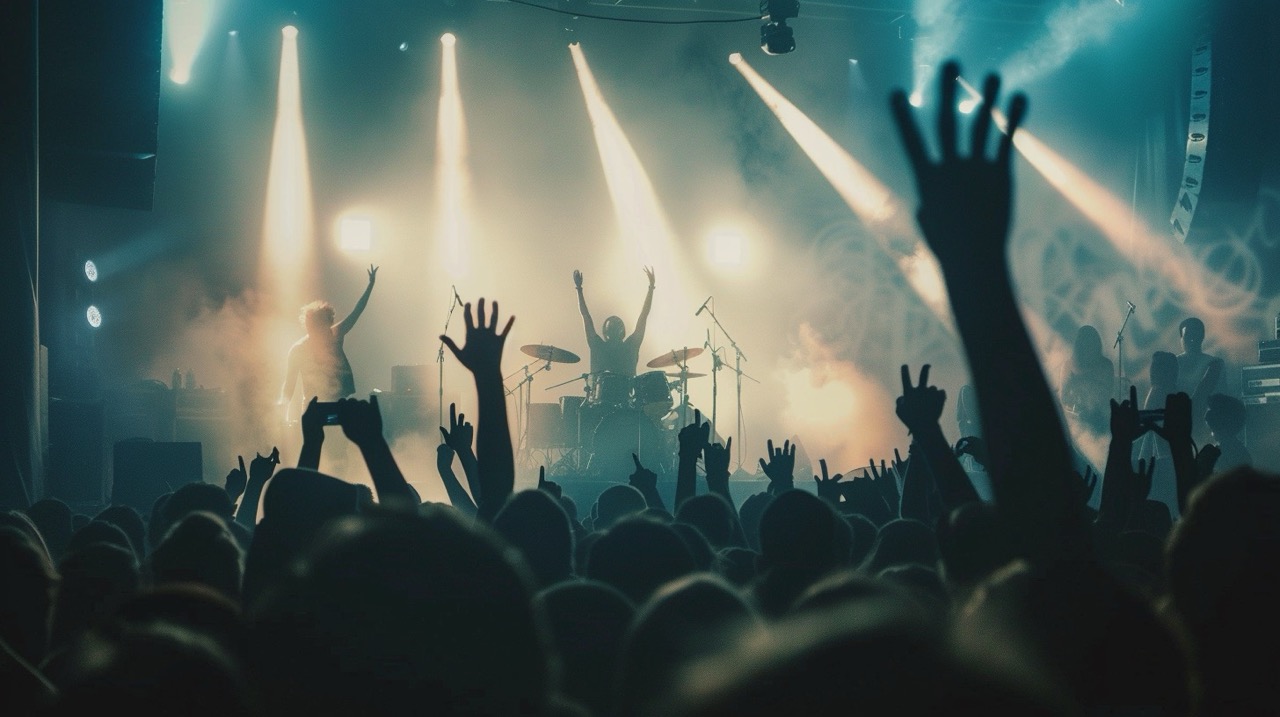
Artificial Monkeys weren't built as a novelty act.
They were built by fans, for fans, with one obsession: doing it properly.
Built by Genuine Arctic Monkeys Fans
Every member of Artificial Monkeys understands the band's catalogue inside out — not just the hits, but the deep cuts, the live variations, the pacing, and the attitude.
This isn't a band that learned the songs from tab websites.
It's a band that studied live footage, bootlegs, era-specific performances, setlist structures, and tonal differences.
That knowledge shows on stage.
Era-Specific Attention to Detail (2006–2013)
Artificial Monkeys don't blur eras together.
They intentionally recreate early-era speed and urgency, mid-era darkness and groove, and AM-era swagger and restraint.
Songs are performed with the correct feel for their period — which is why fans often say: "This feels like seeing them back then."
Not Just a Tribute — A Recreation
Artificial Monkeys don't parody Arctic Monkeys. They recreate the experience.
No exaggerated impressions, no forced accents, no comedy elements, no gimmicks.
Just a tight, confident, high-energy live show that puts the music first.
That's why venues rebook them. That's why crowds stay engaged. That's why word-of-mouth keeps growing.
Sound & Tone Accuracy — Getting It Right
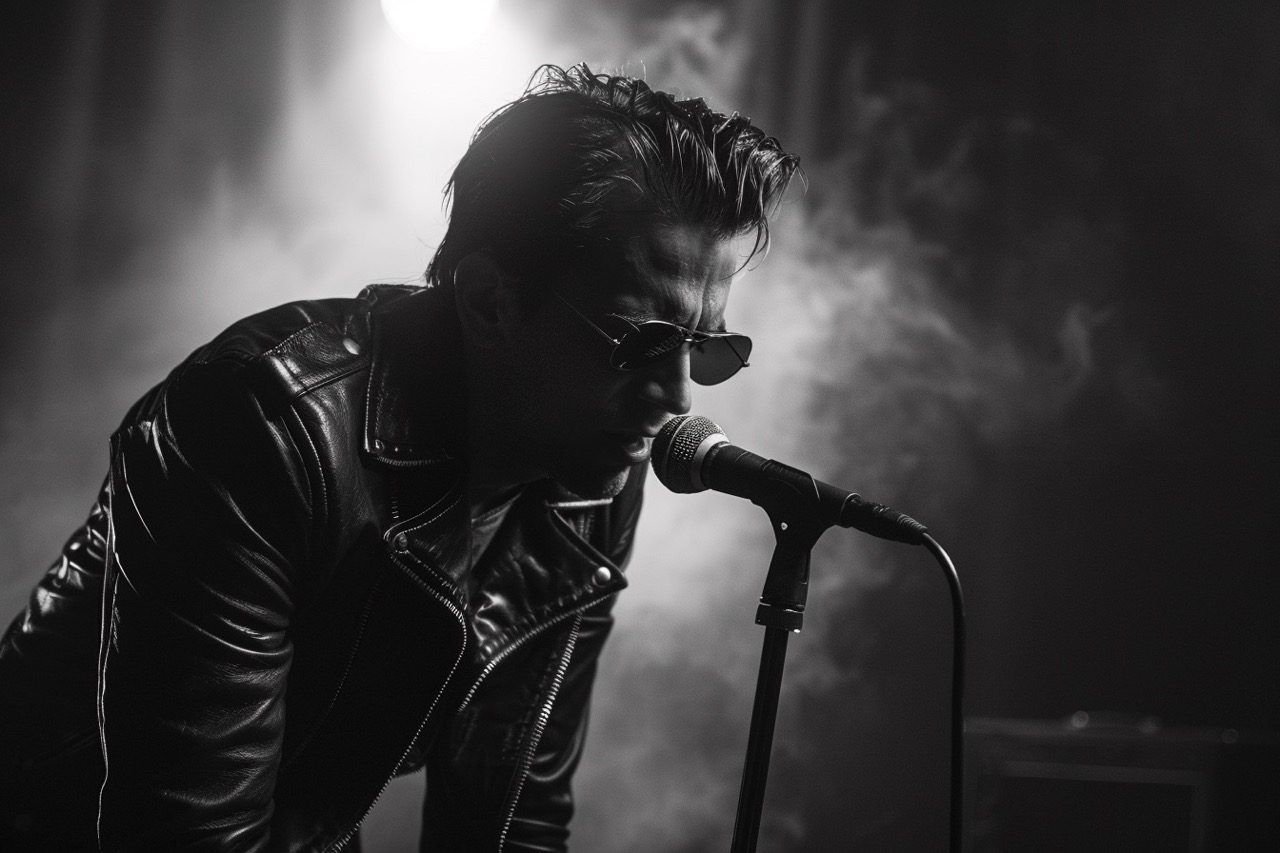
If there's one thing Arctic Monkeys fans notice immediately, it's tone.
You can forgive a missed glance or a different jacket — but if the guitars, drums, and bass don't feel right, the illusion collapses.
Artificial Monkeys place sound accuracy at the centre of everything they do.
Correct Guitars, Amps & Pedals
Each era of Arctic Monkeys requires different tonal decisions.
Artificial Monkeys replicate this by using Fender-style guitars for early indie bite, Gibson-style guitars for mid-era weight, Jazzmaster-style tones for AM swagger, and Orange/Vox-style amp voicings with era-appropriate overdrive and fuzz.
The goal isn't to sound similar — it's to sound recognisable within seconds.
Matching Each Album's Live Sound
A key difference between Artificial Monkeys and average tribute acts is that they don't flatten the catalogue.
Early songs are fast, aggressive, and raw. Humbug tracks are darker and heavier. Suck It and See songs breathe and shimmer. AM tracks groove, drag, and swagger.
This dynamic contrast is exactly what makes Arctic Monkeys live shows compelling — and exactly what Artificial Monkeys recreate.
Why Tone Matters More Than Look
Fans don't close their eyes at gigs because they're bored — they close them because the sound transports them.
Artificial Monkeys understand that groove beats costume, feel beats mimicry, and tone beats theatrics.
That's why audiences often comment on how "right" it sounds — even if they can't explain why.
Stage Presence, Style & AM Swagger
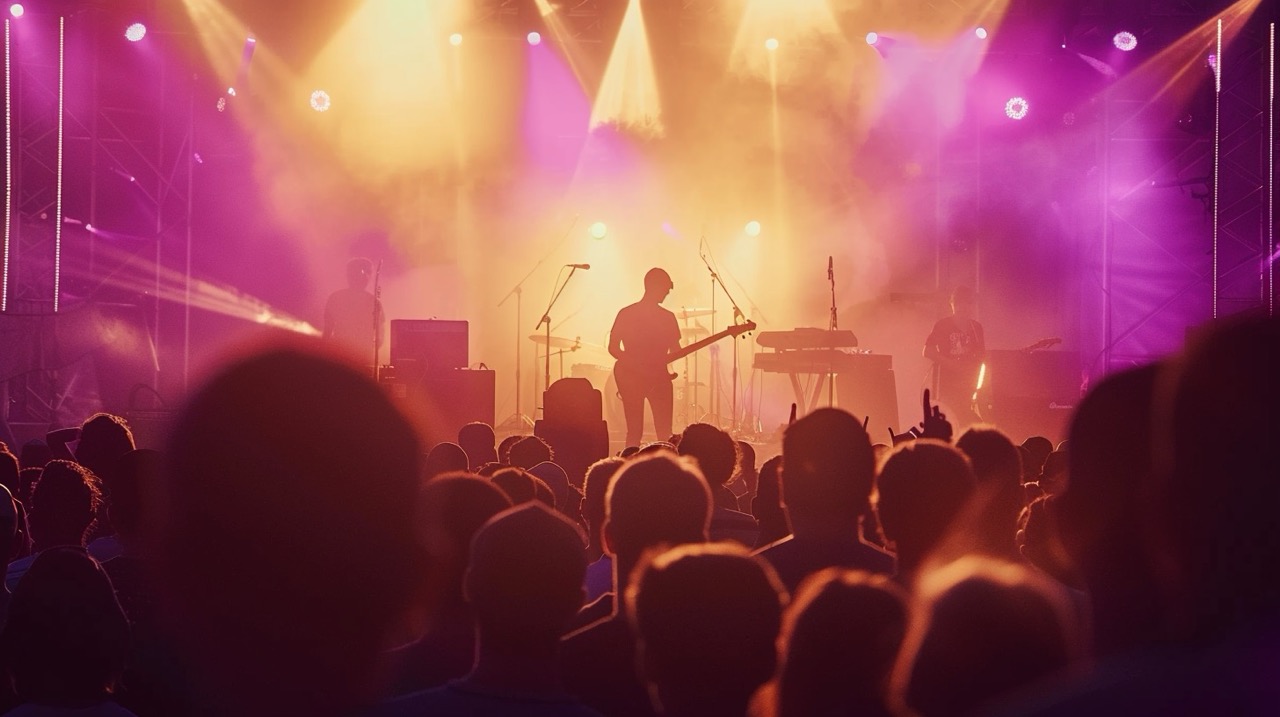
Arctic Monkeys' live appeal has never relied on choreography or spectacle.
It's always been about confidence, control, and connection.
Artificial Monkeys approach stage presence the same way.
Capturing Alex Turner's Live Persona (Without Parody)
The hardest thing to replicate is Alex Turner's presence — because it's subtle.
Artificial Monkeys avoid exaggerated accents, forced impressions, and theatrical mimicry.
Instead, they focus on calm confidence, relaxed swagger, natural crowd engagement, and letting the songs do the talking.
The result feels authentic rather than performative.
Lighting, Movement & Crowd Interaction
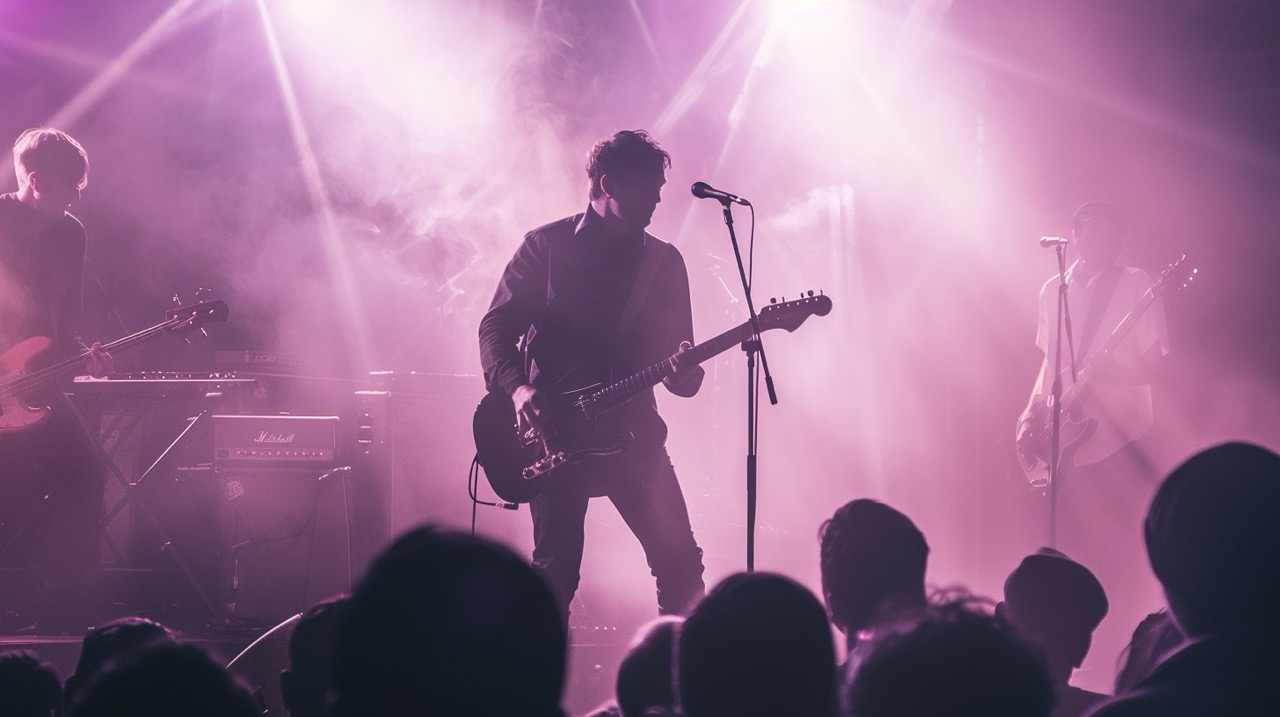
Artificial Monkeys keep staging simple and effective: moody lighting, minimal movement, strong eye contact, controlled pacing.
This mirrors how early Arctic Monkeys shows felt — intense without being overproduced.
Crowds respond because nothing feels forced.
Why the Energy Feels Authentic
Authenticity comes from restraint.
Artificial Monkeys understand when to let a groove breathe, let a chorus hit hard, let a crowd sing, and let silence build tension.
That musical maturity separates serious tribute acts from novelty ones.
The Live Experience — What to Expect
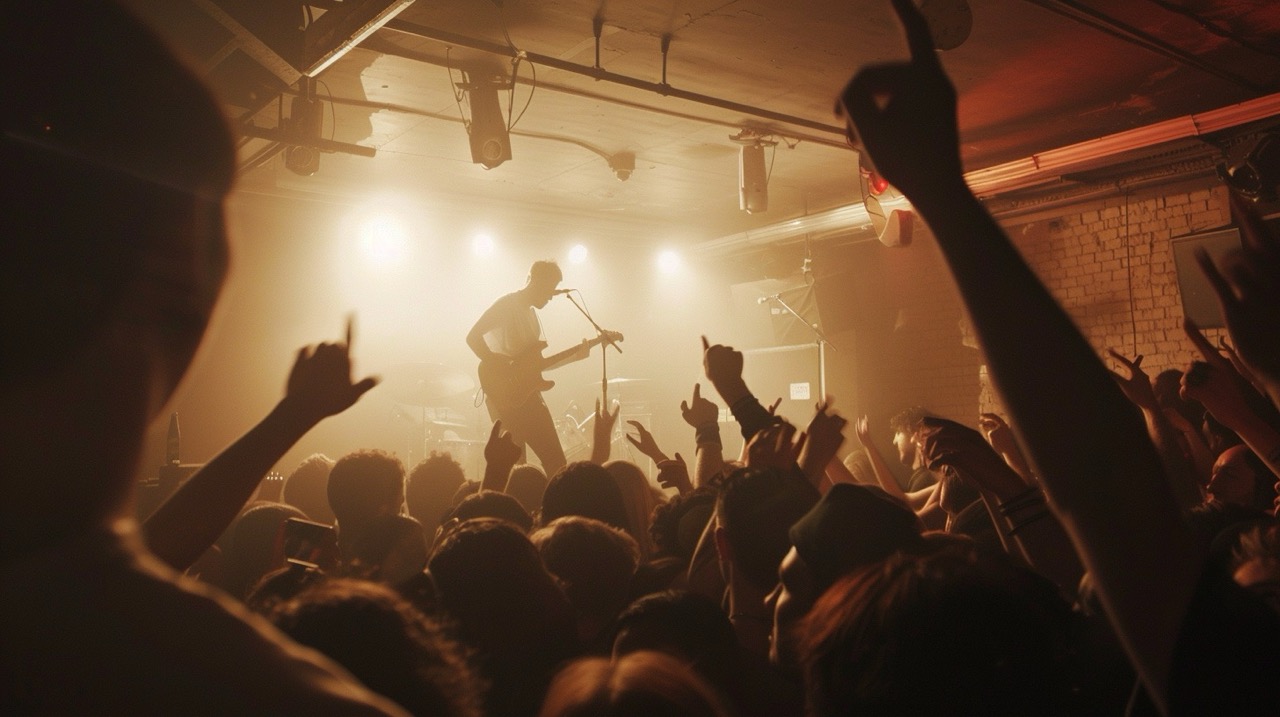
So what does an Artificial Monkeys show actually feel like?
In short: like stepping back into the golden era.
Setlist Flow — From Fast Openers to Big Closers
Artificial Monkeys build setlists the same way Arctic Monkeys used to: fast, punchy openers, heavy mid-set grooves, emotional crowd moments, explosive closers.
You'll hear early indie chaos, mid-era depth, and AM-era swagger.
The pacing keeps audiences locked in from start to finish.
Crowd Reactions & Singalong Moments
Certain moments never fail: the opening drum fill of Brianstorm, the opening line of Dancefloor, the build-up in 505, the riff drop in Do I Wanna Know?, and the closer — R U Mine?
These are communal experiences — not passive listening moments.
That "You're There Again" Feeling
Fans often describe Artificial Monkeys shows as nostalgic, electric, immersive, emotional, and genuinely exciting.
Not because of gimmicks — but because the band respects what made those years special.
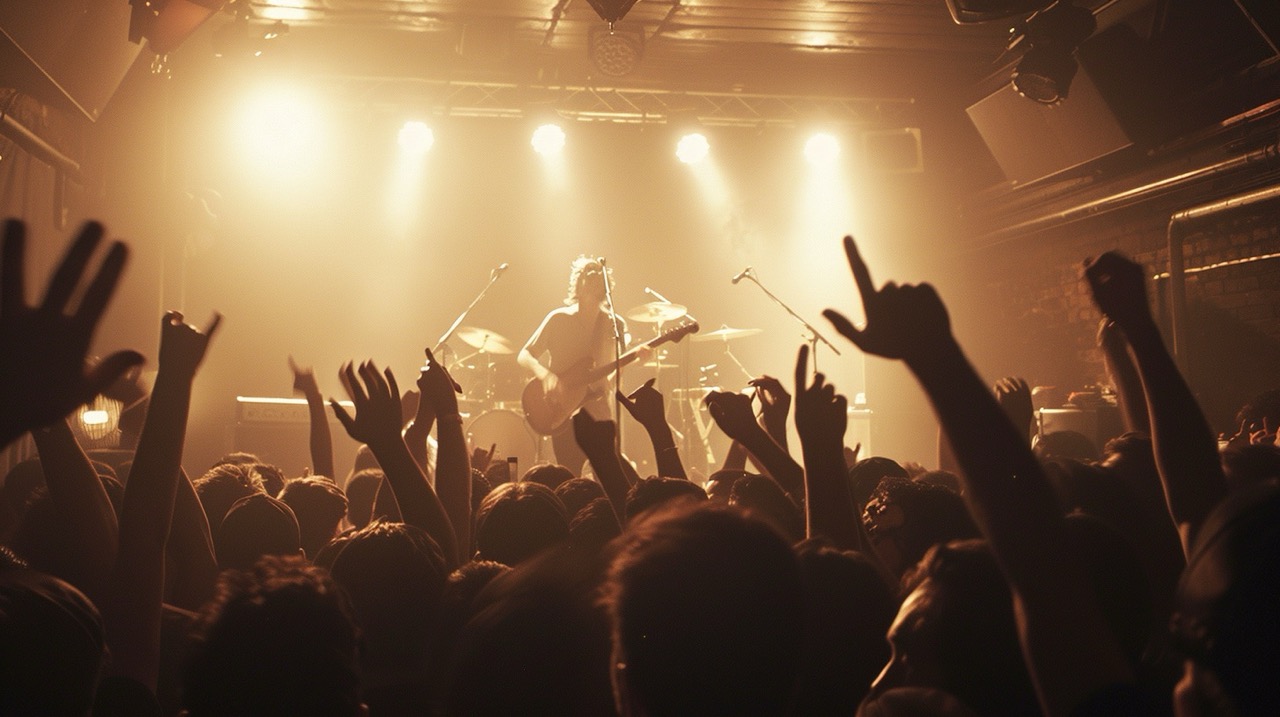
Where Artificial Monkeys Perform (UK Coverage)
Artificial Monkeys perform across the UK, bringing the Arctic Monkeys experience to audiences who might never get to see the real thing live again in this form.
Pubs, Clubs & Live Music Venues
Perfect for indie nights, rock clubs, grassroots venues, and ticketed shows.
These environments mirror where Arctic Monkeys built their reputation — and the energy translates perfectly.
Festivals & University Events
Artificial Monkeys are ideal for summer festivals, student events, freshers' weeks, and outdoor stages.
Their setlist spans enough eras to keep mixed-age crowds engaged.
Private Parties, Weddings & Corporate Events
Yes — Arctic Monkeys tributes work brilliantly at weddings, milestone birthdays, corporate parties, and brand events.
The familiarity of the songs means crowds don't need convincing — they're in from the first chorus.
Perfect Events for an Arctic Monkeys Tribute
Indie Nights & Rock Clubs
If your audience loves Britpop, indie rock, and guitar music, Artificial Monkeys are an instant hit.
Festivals & Summer Events
High-energy, recognisable songs make them perfect for outdoor stages, headline tribute slots, and evening festival sets.
Birthdays, Weddings & Corporate Bookings
If you want atmosphere, crowd engagement, and guaranteed singalongs, an Arctic Monkeys tribute delivers across all age groups.
Why Fans & Venues Choose Artificial Monkeys
Audience Feedback & Repeat Bookings
Venues rebook Artificial Monkeys because crowds stay longer, bars stay busy, audiences respond instantly, and word-of-mouth grows.
Professional Setup & Reliability
You're booking a professional band: reliable, organised, experienced, and venue-friendly.
Which matters just as much as the performance.
A Crowd-Pleaser Across All Ages
From fans who grew up with the early albums to younger audiences discovering AM — the appeal is broad and consistent.
FAQs
Who are the best Arctic Monkeys tribute band in the UK?
What era of Arctic Monkeys do Artificial Monkeys cover?
Can I book Artificial Monkeys for a private event?
Do they play songs like "Do I Wanna Know?" and "505"?
Where do Artificial Monkeys perform?
How long is an Artificial Monkeys set?
🎟 Relive the golden era of Arctic Monkeys live.
Book Artificial Monkeys, the UK's most authentic Arctic Monkeys tribute band.
📞 Call 07897 020817 or
👉 Book online here